Here is the whole argument in seven lines, for the people who scroll.
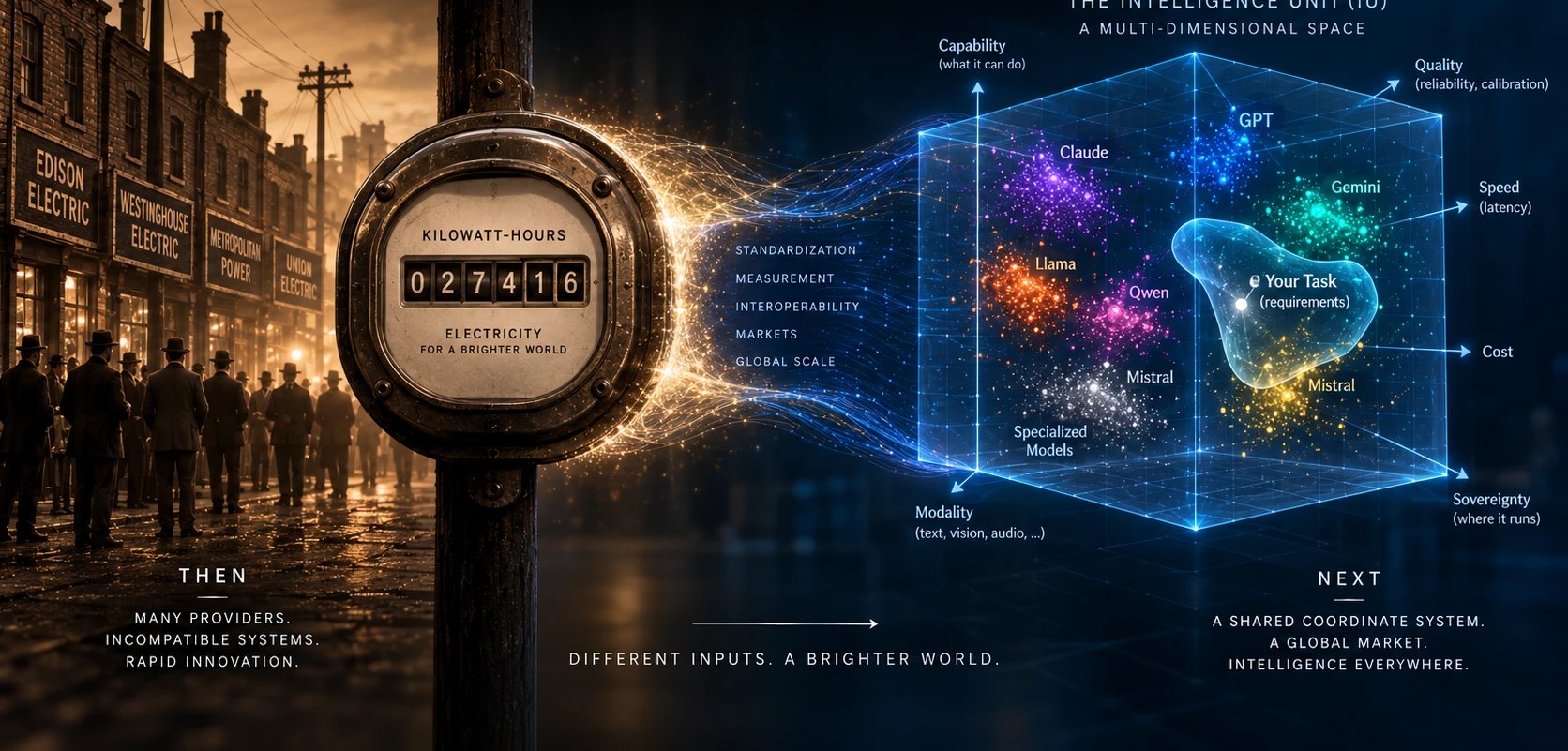
- In 1890 you bought a power company. By 1920 you bought kilowatt-hours, and the generator disappeared behind the meter.
- In 2026 we buy named models and pay by the token. Tokens measure the fuel, not the light.
- A human picking a model from a dropdown is a person choosing a power company for each lamp. Model selection is a dispatch problem, and dispatch is a job for the grid.
- A kilowatt-hour is classical work, one number that adds up. Intelligence is quantum: models are states, tasks are observables, runs are measurements, and uncertainty is part of the product.
- The unit is the bit. Intelligence work is verified uncertainty removed, weighed against one frozen reference model, the candle. Knowledge work is compression, and compression already has a unit.
- Verification is the bottleneck, and cheap typed judges turn it into a market of its own.
- My bet: the winner will not own the smartest model. It will own the map, and it will light the candle.
The long version starts in 1890.
Standardization, not a better dynamo, made electricity a market.
How electricity stopped being a brand
In 1890 there was no electric bill. You subscribed to a system.
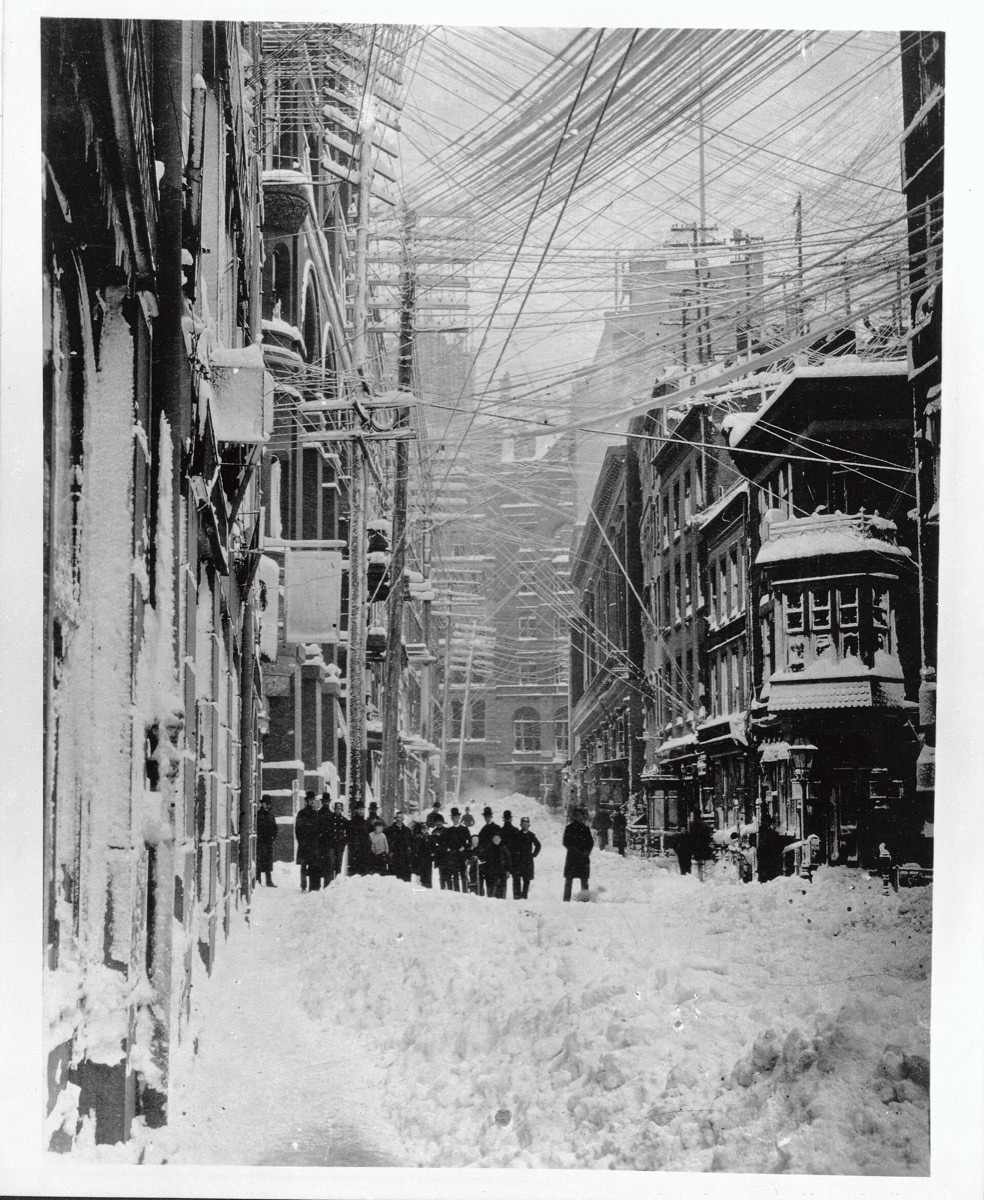
Edison sold direct current and Westinghouse sold alternating current, and a city could have a dozen private power companies, each with its own voltage, its own frequency, and its own wires strung down the street. Your lamp worked on one company's current and died on another's. Switching suppliers meant rewiring the building.
Then, over about thirty years, the whole thing untangled itself. Standards arrived. Alternating current made long-distance transmission practical, so generation could move out of the city and get big. The networks merged, the regulators showed up, and somewhere in the middle of all that a meter appeared on the wall that counted consumption in one unit, the kilowatt-hour.
The breakthrough was the abstraction. The hardware came second.
Coal, hydro, gas, and later nuclear and solar: the customer stopped caring which one made the power. You pay for the useful product, and the machinery behind it becomes somebody else's problem.
That abstraction is what made a market possible, and I would argue it is what made the 20th century possible. The century of the electron ran on a billing unit.